Content Marketing in Digital Marketing
Content marketing is a central part of digital marketing. It helps businesses attract the right audience, answer their questions and build lasting relationships through useful, relevant content. Rather than relying solely on direct advertising, content marketing gives people a reason to discover and engage with a brand.
What is content marketing?
Content marketing is the planning, creation and distribution of content designed for a particular audience. The content may inform, educate, entertain or help people solve a problem. Common formats include blog articles, videos, guides, email newsletters, podcasts, case studies and social media posts.
Effective content is more than a sales message. It offers genuine value while helping an organisation communicate what it does and why it matters. A business might, for example, publish a practical guide to choosing a service, explain a complicated process or share advice based on its experience.
Why content marketing matters
It helps people find your business
Search engines and social platforms give people many ways to discover information. Content that addresses the questions your audience is asking can make your business easier to find. Search engine optimisation (SEO) can support this by helping search engines understand a page and match it with relevant searches.
It builds trust and credibility
Useful, accurate content demonstrates knowledge and gives potential customers a clearer sense of how a business works. Publishing consistently can help build familiarity over time, particularly when content is transparent, well researched and written with the reader in mind.
It supports the customer journey
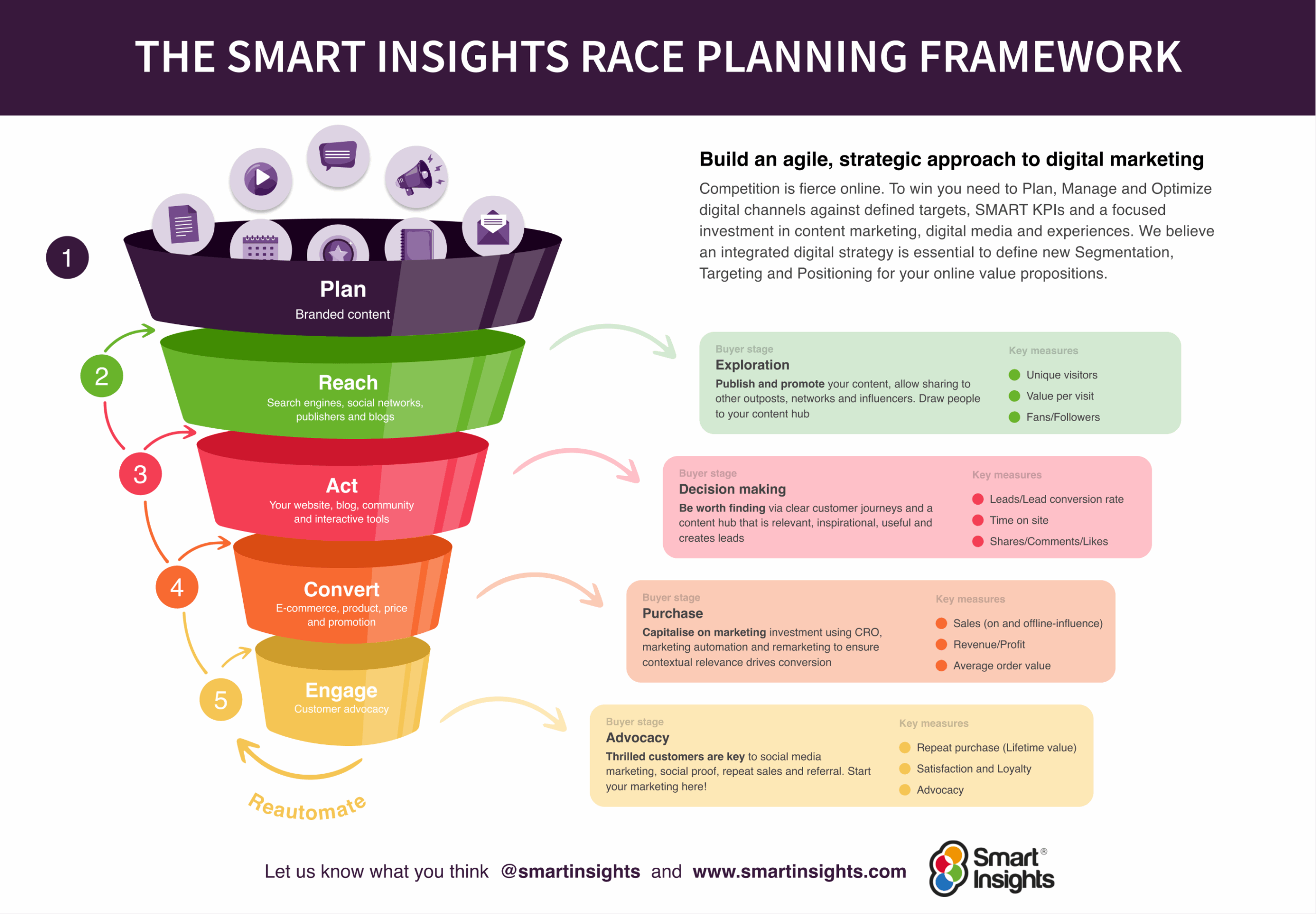
People need different information at different stages of a purchase. Someone just learning about a problem may value an introductory article, while someone comparing options may prefer a detailed comparison or case study. Content can guide people from early research towards an informed decision without pressuring them at every step.
It can strengthen other digital marketing activity
Content can be shared through email, social media, paid campaigns and a company website. A well-made resource may serve several purposes: a research report can become a series of articles, social posts and newsletter content. This helps businesses make better use of their ideas and marketing investment.
Choosing the right content
The best format depends on the audience, the subject and the action you want readers to take. A short video may be effective for demonstrating a product, while a detailed article may be better for explaining a complex topic. A downloadable checklist could help readers put advice into practice.
Before creating content, consider:
- Audience: Who is the content for, and what do they need to know?
- Purpose: Is the aim to raise awareness, explain an offer, generate enquiries or support existing customers?
- Format: Which format will communicate the information clearly and suit the audience’s preferences?
- Distribution: Where will people find the content, and how will it be promoted?
- Next step: What should readers do after engaging with it?
How to create an effective content marketing strategy
Set clear objectives
Start with specific business goals. These might include increasing relevant website visits, building an email subscriber list, generating qualified enquiries or improving customer retention. Clear objectives make it easier to decide what to publish and how to assess its performance.
Understand your audience
Use customer conversations, sales enquiries, website analytics and market research to identify common questions and concerns. Avoid relying on assumptions alone. The more accurately you understand your audience’s needs, the more likely your content is to be useful.
Plan topics and formats
Create a manageable content plan based on your objectives and audience needs. Group topics into themes, such as guides, frequently asked questions, product information and customer stories. A calendar can help coordinate publishing, but quality and usefulness matter more than posting frequently for its own sake.
Create helpful, well-presented content
Use clear language, a logical structure and accurate information. Break up long sections with descriptive headings, and make sure images, captions and links serve a purpose. Content should reflect the organisation’s voice while remaining focused on the reader.
Optimise and distribute it
For search visibility, use language that reflects how people look for information, write clear page titles and headings, and make pages easy to navigate. Then share the content through suitable channels, such as an email newsletter, relevant social platforms or partnerships. Distribution should be planned alongside production, not left until the content is published.
Review and improve
Measure performance against the original objectives. Depending on the content, useful indicators may include relevant visits, time spent on a page, email sign-ups, enquiries, conversions or engagement. Use the results to improve existing content and inform future topics.
Common content marketing mistakes
- Focusing only on sales: Content that constantly promotes an offer may not answer the audience’s questions or earn their attention.
- Publishing without a plan: An inconsistent stream of unrelated posts can make it difficult to build momentum or measure results.
- Chasing trends without purpose: Popular topics are not automatically relevant to a business or its customers.
- Ignoring distribution: Publishing a page does not guarantee that the intended audience will find it.
- Measuring only views: High traffic is not necessarily valuable if visitors are not relevant or the content does not support the business objective.
- Letting content become outdated: Important pages should be reviewed periodically to check that facts, links and recommendations remain accurate.
Content marketing and responsible use of AI
AI tools can assist with research, planning, outlining and editing, but they should not replace human judgement. Check facts, sources and tone before publishing, and make sure the finished work reflects genuine expertise and provides something useful to the reader. Accuracy, originality and transparency remain essential.
Conclusion
Content marketing works best when it is built around the audience’s needs and connected to clear business objectives. By creating useful material, distributing it thoughtfully and learning from performance, businesses can make content a valuable part of their wider digital marketing strategy.
Five Key Benefits of Content Marketing in Enhancing Digital Marketing Strategies
- Builds brand awareness.
- Attracts relevant audiences.
- Supports SEO and search visibility.
- Builds trust and credibility.
- Generates leads over time.
Challenges of Content Marketing in Digital Strategy: Navigating Delays, Costs, and Competition
- Results can take time to appear.
- Creating quality content requires ongoing effort.
- Success is not guaranteed.
- Content can get lost in a crowded market.
- Measuring its impact can be difficult.
- Outdated content may damage trust.
- Promotion can add extra costs.
Builds brand awareness.
Content marketing helps build brand awareness by putting useful, relevant information in front of potential customers across channels such as search engines, social media and email. When people regularly encounter content that answers their questions or offers practical value, they become more familiar with the brand, its expertise and what it stands for. Over time, this consistent visibility can help the business stay in mind when they are ready to make a purchase.
Attracts relevant audiences.
Content marketing helps attract relevant audiences by creating useful, targeted material around the questions, interests and challenges of the people a business wants to reach. Articles, videos and guides that address these needs can appear in relevant searches and encourage the right people to engage. This means a business is more likely to connect with potential customers who are genuinely interested in its products or services, rather than simply reaching a large, untargeted audience.
Supports SEO and search visibility.
Content marketing supports SEO by giving search engines useful, relevant pages to discover and index. Articles, guides and other well-structured resources can answer the questions people search for, helping a website appear in relevant results and attract more qualified visitors. When content is accurate, easy to navigate and regularly reviewed, it can strengthen a site’s search visibility over time.
Builds trust and credibility.
Content marketing helps build trust and credibility by giving people useful, accurate information before asking them to make a purchase. Helpful articles, guides and case studies can demonstrate a business’s knowledge, answer common questions and show that it understands its audience’s needs. Over time, consistently providing valuable content can strengthen a brand’s reputation and give potential customers greater confidence in choosing its products or services.
Generates leads over time.
One of the key advantages of content marketing is its ability to generate leads over time. Useful articles, guides and other resources can continue attracting people through search engines and social media long after they are published. By answering questions and offering relevant insights, this content can build trust with potential customers and encourage them to take the next step, such as signing up to a newsletter or making an enquiry. Regularly reviewing and updating evergreen content can help it remain valuable and keep bringing in leads.
Results can take time to appear.
One drawback of content marketing is that results can take time to appear. Unlike paid advertising, which can generate visibility as soon as a campaign begins, content often needs time to reach an audience, build trust and gain traction in search results. Businesses may need to publish consistently and promote their material for several months before seeing meaningful increases in traffic, enquiries or sales. This makes patience, realistic expectations and regular measurement essential.
Creating quality content requires ongoing effort.
Creating quality content requires ongoing effort. Researching topics, producing useful and accurate material, and keeping it up to date all take time and resources. Businesses also need to publish consistently and review how their content is performing, which can be challenging alongside other marketing priorities. Without a realistic plan and dedicated resources, content quality may suffer or publishing may become irregular.
Success is not guaranteed.
Content marketing does not guarantee success. Even well-researched, high-quality content may struggle to reach the right audience or generate the expected results, particularly in a crowded market. Search rankings, audience preferences and platform algorithms can also change over time. For this reason, businesses should set realistic goals, promote content through suitable channels and regularly review performance so they can learn, adapt and improve their approach.
Content can get lost in a crowded market.
One drawback of content marketing is that your content can get lost in a crowded market. Businesses across almost every sector publish articles, videos and social media posts, making it harder to capture people’s attention and stand out. Even useful, well-produced content may struggle to reach its intended audience without a clear point of difference, effective promotion and a sound understanding of what people are looking for.
Measuring its impact can be difficult.
Measuring the impact of content marketing can be difficult because results often take time to appear and may involve several touchpoints. A reader might discover a brand through an article, return via social media and only make an enquiry after receiving an email, making it hard to identify which activity influenced their decision. Metrics such as page views and engagement can show how people interact with content, but they do not always reveal its contribution to sales or long-term customer relationships. Businesses therefore need clear objectives and a range of relevant measures, while recognising that some benefits—such as trust and brand awareness—are not easy to quantify.
Outdated content may damage trust.
Outdated content can damage trust by giving readers information that is no longer accurate or relevant. Old prices, broken links, superseded advice or references to discontinued products may make a business appear careless and undermine its credibility. Regularly reviewing and updating important pages helps keep information reliable and shows that the business is committed to providing a dependable experience.
Promotion can add extra costs.
Promoting content can add extra costs to a digital marketing budget. While creating a useful article, video or guide takes time and resources, reaching a wider audience may also require paid social media campaigns, search advertising or influencer partnerships. These costs can build up, particularly when a business needs to promote content regularly to maintain visibility. It is therefore important to plan a realistic budget and measure whether promotion is delivering worthwhile results.