
Traditional and Digital Marketing: Finding the Right Balance
Marketing helps businesses reach potential customers, explain the value of their products or services, and build lasting relationships. The methods available have changed considerably over time. Traditional marketing remains part of many campaigns, while digital marketing has created new ways to target audiences and measure results. Understanding the strengths of each can help businesses choose an effective mix.
What is traditional marketing?
Traditional marketing refers to channels that do not rely primarily on the internet. Common examples include television and radio advertising, newspapers and magazines, direct mail, billboards, leaflets, sponsorship and in-person events.
These channels can be useful for reaching people in a particular location or for building broad awareness. A local business, for instance, might use community sponsorship, outdoor advertising or printed materials to connect with nearby customers. A television or radio campaign can also introduce a brand to a large audience.
What is digital marketing?
Digital marketing uses online channels and technology to promote a business. It can include search engine optimisation (SEO), paid search advertising, social media, email marketing, online video, display advertising and content marketing.
Digital channels make it possible to reach people based on factors such as their location, interests or online behaviour. They also provide data that can help businesses understand how audiences respond. For example, a company can track visits to its website, email sign-ups or sales generated by an advertising campaign.
Key differences
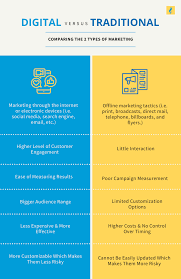
Traditional and digital marketing differ in how messages are delivered, who they reach and how their results are assessed.
- Reach: Traditional media can offer broad exposure, while digital campaigns can target particular audiences. The best option depends on the campaign’s purpose and the people it needs to reach.
- Interaction: Digital channels often allow immediate responses through comments, clicks, enquiries or purchases. Traditional advertising is generally less interactive, although events and direct mail can prompt a response.
- Measurement: Online activity can often be tracked in detail. Traditional marketing can also be evaluated, using methods such as customer surveys, promotional codes and changes in sales, but attribution may be less direct.
- Longevity: A printed advert or broadcast campaign may have a defined run. Online content can remain available over time, although it may need updating and continued promotion to stay visible.
- Cost: Costs vary widely in both areas. A digital campaign can begin with a modest budget, while competitive online advertising can become expensive. Print, broadcast and outdoor advertising can also range from affordable local placements to substantial investments.
The benefits of combining both approaches
Traditional and digital marketing do not have to compete. Used together, they can reinforce one another. A printed advert might direct readers to a website, while a digital campaign can remind people about an event they have seen advertised locally. A business could also use social media to extend the reach of an in-person event.
A coordinated campaign helps keep the message consistent across channels. It also gives customers more than one way to discover and engage with a brand. Someone might first hear about a business through a local radio advert, then visit its website before making a purchase.
How to choose the right marketing mix
There is no single formula that works for every organisation. The right mix depends on the business, its audience, its objectives and its budget. A useful starting point is to define the outcome: is the aim to build awareness, generate enquiries, increase online sales or encourage repeat business?
Businesses should then consider where their audience spends time and which channels are likely to reach them effectively. Testing different approaches can reveal what works. Set clear measures before a campaign begins, review performance regularly and adjust the activity where necessary.
Conclusion
Traditional marketing can provide visibility and a tangible connection with audiences, while digital marketing offers flexibility, interaction and detailed measurement. Neither approach is automatically right for every business. By understanding their respective strengths and choosing channels that support clear objectives, businesses can create marketing campaigns that are relevant, joined-up and effective.
Eight Key Benefits of Traditional and Digital Marketing
- Traditional marketing can reach local audiences effectively.
- Print adverts offer a tangible brand experience.
- TV and radio can build broad awareness.
- Events create opportunities for face-to-face engagement.
- Digital marketing can target specific audiences.
- Online campaigns are easy to measure.
- Social media encourages direct interaction.
- Digital content can be updated quickly.
Six Drawbacks of Traditional and Digital Marketing
- Traditional campaigns can be costly to produce and distribute.
- Traditional advertising offers limited audience targeting.
- Measuring traditional campaign results can be difficult.
- Digital marketing faces intense online competition.
- Digital campaigns may be ignored or blocked by users.
- Digital marketing requires ongoing monitoring and updates.
Traditional marketing can reach local audiences effectively.
Traditional marketing can be an effective way to reach local audiences. Channels such as community newspapers, local radio, billboards, leaflets and event sponsorship help businesses connect with people in a specific area. By choosing placements that reflect where local customers live, work or spend their time, a business can build awareness and familiarity within its community. These methods can also complement digital marketing, directing people to a website or social media page for more information.
Print adverts offer a tangible brand experience.
Print adverts offer a tangible brand experience that digital marketing cannot fully replicate. A well-designed advert in a magazine, brochure or leaflet can be held, revisited and shared, giving the brand a physical presence in someone’s everyday life. The choice of paper, colours and layout can also communicate a brand’s personality and quality, helping the message feel memorable and distinctive. When paired with digital channels, print can encourage readers to visit a website, scan a QR code or follow a brand online.
TV and radio can build broad awareness.
Television and radio can help businesses build broad awareness by sharing a message with large audiences in a familiar, accessible way. A well-placed advert can introduce a brand to people across a region or country, including those who may not be actively searching for it online. When supported by digital marketing, the message can be reinforced through websites, social media and online advertising, giving audiences more opportunities to learn about the business.
Events create opportunities for face-to-face engagement.
Events are a valuable part of both traditional and digital marketing, creating opportunities for face-to-face engagement that online interactions cannot fully replicate. Trade shows, product launches and community events allow businesses to demonstrate what they offer, answer questions and build personal connections with potential customers. Digital marketing can support these events by promoting them beforehand, sharing live updates and keeping conversations going afterwards. Together, in-person experiences and online follow-up can help build trust and make a brand more memorable.
Digital marketing can target specific audiences.
One of the key advantages of digital marketing is the ability to target specific audiences. Businesses can tailor campaigns to reach people according to factors such as their location, interests, age group or online behaviour. This helps make marketing more relevant to potential customers and can reduce wasted spending. When combined with traditional marketing, such as local advertising or events, targeted digital campaigns can also reinforce a brand’s message and encourage people to take action.
Online campaigns are easy to measure.
A key advantage of digital marketing is that online campaigns are easy to measure. Businesses can track results such as website visits, clicks, email sign-ups and sales, often in real time. This makes it easier to see which messages and channels are working, compare performance against campaign goals and adjust activity to make better use of the marketing budget.
Social media encourages direct interaction.
Social media encourages direct interaction between businesses and their audiences. Customers can ask questions, share feedback and respond to content, while businesses can reply promptly and take part in conversations. This helps brands understand their customers’ needs, build stronger relationships and create a more personal experience. When combined with traditional marketing, social media can also give people an easy way to continue engaging with a campaign after seeing it in print, on the radio or elsewhere.
Digital content can be updated quickly.
One advantage of digital marketing is that content can be updated quickly when information, prices or offers change. Businesses can edit a website, adjust an advert or publish a new social media post without waiting for materials to be reprinted or a new campaign to be scheduled. This flexibility helps keep messages accurate and relevant, and makes it easier to respond to customer feedback or changing market conditions.
Traditional campaigns can be costly to produce and distribute.
Traditional marketing campaigns can be costly to produce and distribute. Creating professional adverts, printing materials or booking television, radio and billboard space may require a substantial budget, particularly when a campaign needs broad coverage or repeated exposure. These costs can make traditional channels less accessible to small businesses, and it may be difficult to adjust a campaign once materials have been produced or advertising space has been booked.
Traditional advertising offers limited audience targeting.
A key drawback of traditional advertising is its limited audience targeting. A newspaper advert, billboard or television spot is typically shown to a broad audience, making it difficult to focus on people with specific interests, needs or buying habits. As a result, businesses may spend money reaching people who are unlikely to become customers, and it can be harder to measure exactly who saw the advert or how it influenced their decisions.
Measuring traditional campaign results can be difficult.
Measuring the results of traditional marketing campaigns can be difficult because it is not always clear which advert or channel prompted someone to take action. A customer may see a billboard, hear a radio advert and later visit a shop, making it hard to attribute the sale to one source. Unlike many digital campaigns, traditional methods often provide less immediate, detailed data, so businesses may need to use surveys, response codes or sales comparisons to estimate their impact.
Digital marketing faces intense online competition.
One drawback of digital marketing is the intense competition online. Businesses often compete for the same audiences, search rankings and advertising space, making it harder for a message to stand out. This can drive up advertising costs and mean that even well-planned campaigns receive limited attention. To attract customers, businesses need to offer relevant, distinctive content and keep refining their approach as competitors and online trends change.
Digital campaigns may be ignored or blocked by users.
A drawback of digital marketing is that audiences can easily overlook or avoid campaigns. People may scroll past adverts, use ad blockers, unsubscribe from emails or mute promotional content on social media. As a result, even a well-targeted campaign may not reach or engage its intended audience, so businesses need to create useful, relevant content and choose their channels carefully.
Digital marketing requires ongoing monitoring and updates.
Digital marketing requires ongoing monitoring and updates to remain effective. Search engine rules, social media trends, audience preferences and advertising costs can change quickly, so campaigns may need regular adjustments. Businesses must also keep websites, content and security measures up to date, while checking performance data and responding to customer feedback. This ongoing work can take considerable time and resources, particularly for smaller teams.


