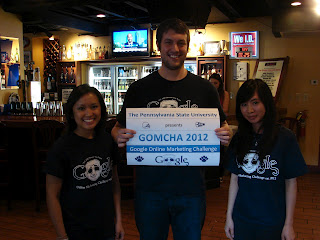
The Google Online Marketing Challenge: A Practical Lesson in Digital Marketing
The Google Online Marketing Challenge (GOMC) was a global university competition that gave students the chance to put digital marketing theory into practice. Rather than working only with hypothetical examples, participating teams planned and ran online advertising campaigns for real businesses and non-profit organisations.
The challenge helped introduce students to search advertising, campaign planning and performance measurement. Although it is no longer running, its hands-on approach remains a useful example of how practical projects can develop digital marketing skills.
How the challenge worked
Teams of students worked with a business or non-profit organisation to identify its marketing goals and create an online advertising campaign. Google provided each team with a small advertising budget to use on its advertising platform, then known as Google AdWords and now called Google Ads.
The campaign ran for a limited period. Teams researched relevant search terms, wrote adverts and decided how to allocate their budget. They also monitored results and adjusted their campaigns where appropriate. The work did not end when the adverts stopped: students had to assess the results and explain what they had learned.
What students learned
The challenge brought together several important parts of digital marketing:
- Setting objectives: Teams had to agree what a campaign should achieve, such as raising awareness, attracting website visits or encouraging enquiries.
- Understanding audiences: Choosing useful search terms and writing relevant adverts meant thinking carefully about what potential customers or supporters might be looking for.
- Managing a budget: With limited funds, teams had to make considered decisions about where and how to spend.
- Measuring performance: Students examined campaign data to understand which approaches were working and where improvements might be made.
- Working with clients: Collaborating with a real organisation gave teams experience of listening to a client, agreeing priorities and communicating recommendations.
Why measurement mattered
A successful campaign is not judged by its adverts alone. Teams needed to connect their activity to the organisation’s goals and use evidence to assess its impact. A high number of clicks, for example, would not necessarily mean a campaign had succeeded if those visitors did not take the action the organisation wanted.
This focus on measurement reflects a broader principle of online marketing: define success before a campaign begins, track relevant results and use the findings to make better decisions. The challenge also encouraged students to look beyond individual figures and consider what the data could—and could not—tell them.
A real-world learning experience
For participating organisations, the challenge offered a chance to receive fresh ideas and support with online promotion. For students, it provided an opportunity to apply classroom learning in a real setting. The experience could also help them build a portfolio of practical work and develop skills in teamwork, analysis and presentation.
As with any short campaign, results depended on factors beyond the students’ control, including the organisation’s website, the competitiveness of its market and the suitability of the campaign goals. The greatest value was not simply in achieving a particular number of clicks or conversions, but in learning how to plan, test and evaluate marketing activity responsibly.
Is the Google Online Marketing Challenge still available?
No. The Google Online Marketing Challenge was a historical programme and is no longer open to new participants. It ran for several years, with its final competition held in 2017. Its name may still appear in university materials, articles and student portfolios, so it is useful to distinguish it from current Google Ads training and certification options.
The challenge’s lasting lessons
The Google Online Marketing Challenge showed the value of learning digital marketing by doing it. Its core lessons remain relevant: start with clear objectives, understand the audience, spend thoughtfully, measure what matters and use results to improve. Those principles apply to campaigns of every size, whether they promote a local business, a charity or a global brand.
Understanding Google’s Online Marketing Challenge: Key FAQs and Insights
- What is the 20% rule in Google?
- What is the Google Challenge?
- How does Google use digital marketing?
- What is the 70/20/10 rule in digital marketing?
- What is Google online Challenge?
- How does Google do digital marketing?
- Are Google Ads online marketing platforms?
What is the 20% rule in Google?
The “20% rule” usually refers to an older Google Ads budgeting policy, under which Google could spend up to 20% more than an average daily budget on a particular day, while keeping monthly charges within the applicable limit. It is not a rule specific to the Google Online Marketing Challenge, and it is no longer the current overdelivery limit: Google Ads may now spend up to twice an average daily budget on some days, subject to a monthly charging limit. Always check Google Ads’ current billing guidance for the rules that apply to your account.
What is the Google Challenge?
The Google Challenge usually refers to the Google Online Marketing Challenge, a university competition in which student teams planned and ran online advertising campaigns for real businesses or non-profit organisations using a budget provided by Google. It offered practical experience in campaign planning, advertising and performance measurement. The competition is no longer running; its final edition took place in 2017.
How does Google use digital marketing?
Google uses digital marketing to help people discover its products and services, share useful information and connect with businesses. Its channels include Google Search, YouTube, display advertising, email and social media, alongside tools such as Google Ads and Google Analytics. Campaigns may use search advertising, video, personalised recommendations and informative content, with performance measured against goals such as website visits, sign-ups or sales. The specific approach varies by product and audience, and Google’s marketing activity should not be confused with the former Google Online Marketing Challenge, which was a student competition that ended in 2017.
What is the 70/20/10 rule in digital marketing?
The 70/20/10 rule is a flexible guideline for dividing digital marketing effort or budget: around 70% goes towards proven strategies, 20% towards promising new approaches, and 10% towards experimental or higher-risk ideas. For example, a business might devote most of its budget to channels that already perform well, test new formats with a smaller share, and reserve a little for bold experiments. The proportions are not fixed rules; they should be adapted to the organisation’s goals, resources and results.
What is Google online Challenge?
The Google Online Marketing Challenge was a global university competition that gave student teams the chance to plan and run online advertising campaigns for real businesses and non-profit organisations using a Google Ads budget. It offered practical experience in campaign planning, keyword research, budgeting and performance analysis. The challenge has ended, with the final competition held in 2017, but its hands-on approach remains a useful example of how students can apply digital marketing skills in a real-world setting.
How does Google do digital marketing?
Google uses a mix of digital marketing methods to reach audiences and promote its products and services. These include search advertising through Google Ads, video campaigns on YouTube, display advertising across partner websites, and content and email marketing. It also relies on organic search visibility, useful online resources and audience insights to make its communications more relevant. The exact approach varies by product and campaign, with performance measured against goals such as awareness, website visits, sign-ups or sales.
Are Google Ads online marketing platforms?
Yes. Google Ads is an online advertising platform that businesses can use to promote products and services across Google Search, YouTube and other partner websites and apps. It is one part of online marketing, rather than a complete marketing strategy: advertisers still need to define their goals, understand their audience, create relevant adverts and measure campaign results. While the Google Online Marketing Challenge was a student competition that has ended, Google Ads remains an active platform.