HubSpot Digital Marketing: A Practical Guide for Growing Your Business
Digital marketing works best when your channels, customer data and business goals are connected. HubSpot is a customer relationship management (CRM) platform designed to help businesses bring these activities together. It offers tools for attracting visitors, nurturing prospects, managing customer relationships and measuring results.
Whether you are a small business building its first marketing programme or an established team looking to improve its processes, HubSpot can provide a central place to plan and manage much of your digital marketing.
What is HubSpot digital marketing?
HubSpot digital marketing refers to using HubSpot’s platform to plan, deliver and measure online marketing activity. Depending on the products and plan a business uses, this may include email marketing, landing pages, forms, social media, website content, marketing automation, analytics and CRM tools.
The platform is built around the idea of managing the customer journey: attracting potential customers, helping them explore their options, supporting a purchase and continuing to build the relationship afterwards. Bringing marketing activity and customer information together can make it easier for teams to understand how people interact with a business.
How HubSpot supports digital marketing
Content marketing
Useful content can help a business answer its audience’s questions and build trust over time. HubSpot provides tools for creating and managing website content, blog articles and landing pages. These can support a content strategy focused on relevant topics, clear calls to action and a consistent brand voice.
Publishing content alone is not enough. Businesses should research what their audience needs, organise content around those needs and review performance regularly. Search engine optimisation (SEO), accurate information and a good experience on mobile devices should all be part of the process.
Email marketing
Email remains a useful way to share updates, promote offers and provide relevant information. HubSpot’s email tools can help businesses build and manage contact lists, create campaigns and review engagement. Personalisation and segmentation can make messages more useful by tailoring them to a contact’s interests or stage in the customer journey.
Good email marketing depends on sending messages people have agreed to receive, making it easy to unsubscribe and following applicable privacy and electronic marketing rules. A large mailing list is not necessarily a valuable one if its members do not expect or want to hear from you.
Marketing automation
Automation can handle repeatable tasks, such as sending a follow-up email after someone downloads a guide or assigning a contact to a sales team. Used thoughtfully, it can help teams respond consistently and save time.
Automation should support a considered customer experience, rather than create a stream of irrelevant messages. Before building a workflow, define its purpose, decide which contacts should enter it and check that each step is useful. Regular reviews can help prevent outdated or confusing communications.
CRM and customer data
A CRM helps a business keep track of its interactions with customers and prospects. HubSpot’s CRM can give marketing, sales and service teams a shared view of relevant contact information and activity, depending on how the system is configured.
Reliable data is essential. Establish clear conventions for recording information, remove or correct duplicates and limit access to what people need for their roles. Businesses should also consider data protection requirements when collecting, storing and using personal information.
Reporting and measurement
Marketing reports can help teams understand which activities are contributing to their goals. HubSpot offers reporting features for monitoring selected campaign and customer metrics. Useful measures might include qualified leads, conversion rates, email engagement, landing-page performance and the cost of acquiring a customer.
Choose measures that relate to business outcomes, rather than focusing only on easy-to-count figures such as page views or social media likes. Attribution can also be complex: a customer may interact with several channels before making a purchase. Reports should be interpreted alongside other evidence and business context.
Benefits of using HubSpot
- A more connected workflow: Marketing tasks and customer records can be managed in one platform, reducing the need to switch between separate systems.
- Better visibility: Shared information can help teams understand how contacts have interacted with the business.
- More relevant communications: Segmentation and automation can support messages that better match a contact’s needs.
- Clearer performance tracking: Reporting tools can help teams review campaigns and make informed adjustments.
- Room to develop: Businesses can begin with the features they need and consider additional tools as their requirements change.
Available features depend on the HubSpot products and subscription selected, so it is worth checking the current plan details before making a decision.
How to build a HubSpot digital marketing strategy
- Set clear objectives. Decide what the business needs to achieve, such as increasing qualified enquiries, improving customer retention or growing online sales.
- Understand your audience. Identify the people you want to reach, the questions they ask and the barriers they face when considering your product or service.
- Map the customer journey. Consider what information people need at different stages, from initial research through to purchase and ongoing support.
- Prepare your CRM. Review existing data, establish naming and ownership rules, and make sure forms collect only information that is genuinely needed.
- Create useful content and campaigns. Plan content, email and landing pages around audience needs and a clear next step.
- Use automation with care. Automate processes that are repeatable and valuable, while keeping a human approach where personal support is important.
- Measure, learn and improve. Review performance against your objectives and test changes methodically. Keep what works and revise what does not.
Common mistakes to avoid
HubSpot is a set of tools, not a marketing strategy in itself. Simply importing contacts or switching on automation will not guarantee better results. Businesses should avoid sending generic campaigns to every contact, building complicated workflows before understanding the customer journey and relying on incomplete or poorly maintained data.
It is also important to make a realistic assessment of the time, expertise and budget required to use the platform well. Training, clear internal processes and regular maintenance can make a significant difference to the value a business gets from its investment.
Is HubSpot right for your business?
HubSpot may suit businesses that want to connect marketing activity with customer information and improve coordination between teams. It can be particularly useful where a business needs a structured approach to lead management, email marketing, content and reporting.
The right choice depends on your objectives, existing systems, team capacity and budget. Compare the features you need with the available plans, consider how the platform will fit into your day-to-day work, and make sure you have a plan for data quality and staff training.
Conclusion
HubSpot can help businesses organise and measure digital marketing across key parts of the customer journey. Its greatest value comes from combining the right tools with clear goals, useful content, responsible use of customer data and consistent measurement. Start with the needs of your audience, build a manageable strategy and use the platform to support — rather than replace — thoughtful marketing.
HubSpot Digital Marketing: 12 Frequently Asked Questions Answered
- Is HubSpot a digital marketing tool?
- How much does HubSpot certification cost?
- What exactly does HubSpot do?
- Who is HubSpot’s biggest competitor?
- Is HubSpot a digital marketing platform?
- Is HubSpot digital marketing certificate worth it?
- Is HubSpot used for digital marketing?
- What is HubSpot used for in marketing?
- Why is HubSpot marketing so expensive?
- What does HubSpot do for marketing?
- Is HubSpot a good marketing tool?
- What is HubSpot in digital marketing?
Is HubSpot a digital marketing tool?
Yes, HubSpot is a digital marketing tool, although it is more accurately described as a platform that brings several business functions together. Depending on the products and plan you choose, it can support email marketing, content creation, landing pages, social media, marketing automation, campaign reporting and customer relationship management (CRM). This helps businesses manage and measure marketing activity alongside customer information, though the features available vary by plan.
How much does HubSpot certification cost?
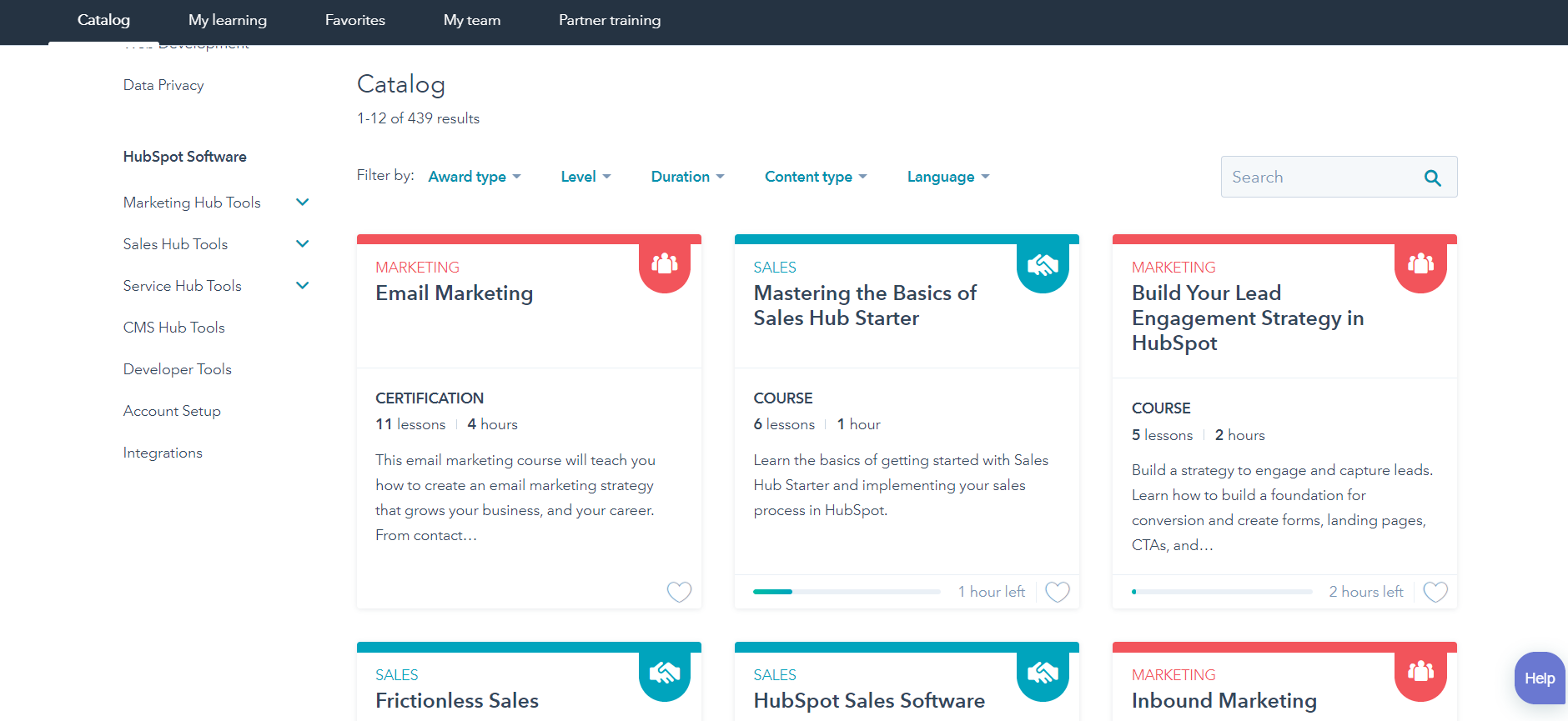
Most HubSpot Academy certifications are free, including the learning materials and assessment. Some courses may involve optional paid tools or resources, but you do not usually need a paid HubSpot subscription to study for or earn a certification. Check the relevant course page for the latest details, as requirements can vary.
What exactly does HubSpot do?
HubSpot is a customer relationship management (CRM) platform that brings together tools for marketing, sales and customer service. Businesses can use it to manage contact records, publish website content, create landing pages and email campaigns, automate selected tasks, track sales activity and measure performance. The exact features available depend on the HubSpot products and plan in use, but the aim is to help teams organise customer interactions and manage more of the customer journey in one place.
Who is HubSpot’s biggest competitor?
HubSpot’s biggest competitor depends on the needs of the business and the HubSpot products being compared. Salesforce is often seen as a leading rival, particularly for CRM and sales tools, while platforms such as Adobe Marketo Engage and Mailchimp compete in areas including marketing automation and email marketing. For small and medium-sized businesses seeking an all-in-one marketing and CRM platform, the most relevant alternative may differ from that for a large organisation with complex requirements. Compare features, ease of use, integrations, support and total cost to find the best fit.
Is HubSpot a digital marketing platform?
Yes, HubSpot is a digital marketing platform, as it provides tools to plan, manage and measure activities such as email marketing, content creation, landing pages, social media and marketing automation. It also includes a CRM, which helps connect marketing efforts with customer and sales data. The features available depend on the HubSpot products and subscription a business chooses.
Is HubSpot digital marketing certificate worth it?
A HubSpot digital marketing certificate can be worthwhile if you are new to the field or want a structured introduction to topics such as content marketing, email, SEO and campaign measurement. It may also show employers that you have taken the initiative to build your knowledge. However, a certificate alone is unlikely to secure a role or prove practical ability, and its value depends on your goals and the jobs you are targeting. For the best return, apply what you learn in real projects and build a portfolio alongside the qualification.
Is HubSpot used for digital marketing?
Yes, HubSpot is widely used for digital marketing. Its tools can help businesses manage activities such as email campaigns, content marketing, landing pages, social media, lead generation and marketing automation, alongside customer information in its CRM. The features available depend on the HubSpot products and subscription a business chooses, and results still rely on a clear strategy, relevant content and responsible use of customer data.
What is HubSpot used for in marketing?
HubSpot is used in marketing to attract potential customers, engage them with relevant content and guide them towards becoming customers. Its tools can support activities such as email marketing, landing pages, forms, social media management, content creation, marketing automation and campaign reporting. By connecting these activities with customer relationship management (CRM) data, HubSpot can help marketing teams organise leads, personalise communications and measure performance. The features available depend on the HubSpot products and plan a business uses.
Why is HubSpot marketing so expensive?
HubSpot marketing can seem expensive because its pricing reflects more than email campaigns: depending on the plan, it may include automation, CRM tools, analytics, reporting and support, with costs increasing as you add advanced features, users or marketing contacts. Some plans may also involve onboarding fees or limits that affect the total cost. For smaller businesses, the full suite can be more than they need, so it is worth comparing plans, checking how contact numbers are counted and weighing the time saved against the subscription cost before committing.
What does HubSpot do for marketing?
HubSpot helps businesses manage and measure digital marketing from one platform. Its tools can support activities such as creating website content and landing pages, sending email campaigns, managing contacts in a CRM, automating follow-ups and tracking campaign performance. By connecting marketing activity with customer information, HubSpot can help teams deliver more relevant communications and understand how their efforts contribute to business goals. The features available depend on the HubSpot products and plan a business uses.
Is HubSpot a good marketing tool?
Yes, HubSpot can be a good marketing tool for businesses that want to bring activities such as email marketing, content management, automation, reporting and customer data together in one platform. Its CRM can help marketing and sales teams share information and manage leads more consistently. Whether it is the right choice depends on your goals, budget, existing systems and the features you need; some businesses may find its range of tools more than they require. For the best results, use HubSpot as part of a clear strategy, keep your data accurate and review performance regularly.
What is HubSpot in digital marketing?
In digital marketing, HubSpot is a platform that brings together tools for managing customer relationships (CRM), creating content, sending email campaigns, capturing leads and measuring results. Businesses can use it to attract potential customers, nurture their interest with relevant communications and track interactions throughout the customer journey. The features available depend on the HubSpot products and plan selected.